


Cash-Secured Put Strategy
A cash-secured put means you sell a put and keep enough cash ready to buy 100 shares at the strike if assignment happens.
The key idea is simple: this is not just a premium trade. It is a possible stock purchase with premium attached.
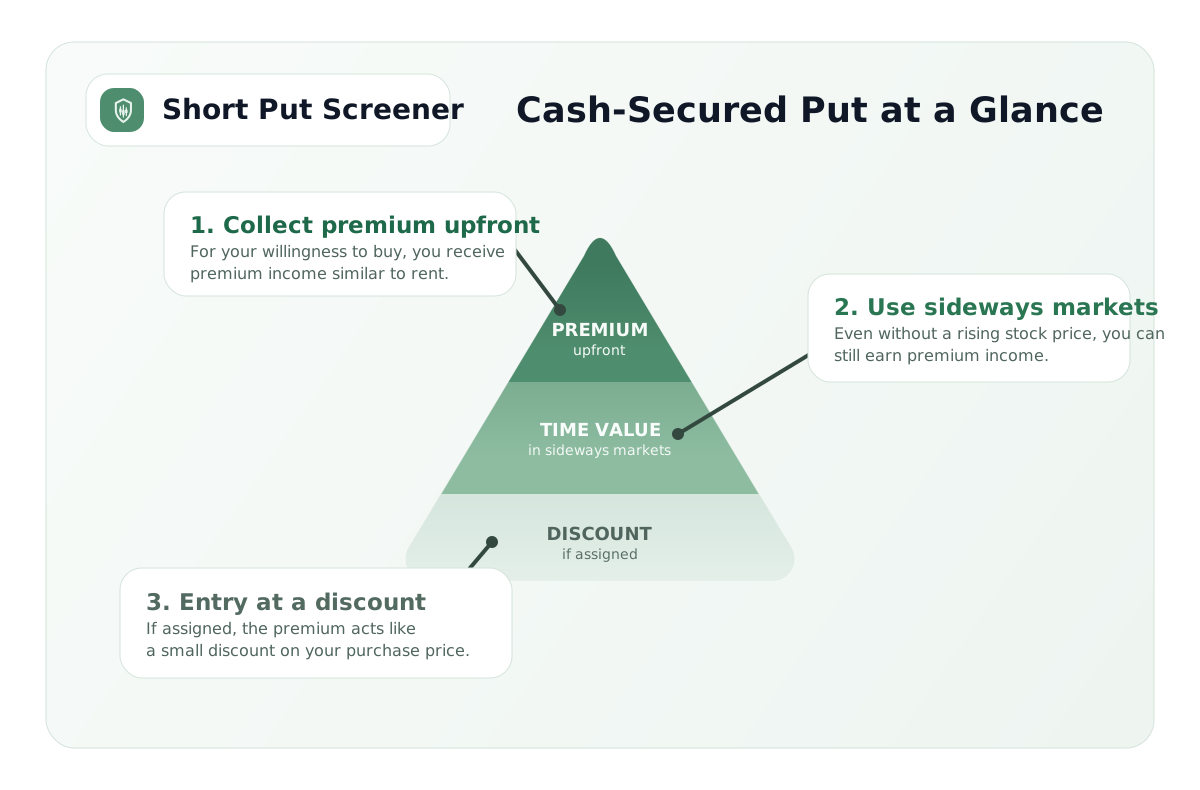
This visual shows the three core ways cash-secured puts can create value in one simple structure.
At the top, premium is collected immediately. In the middle, time value can still work even when the stock barely moves. At the bottom, assignment can turn the premium into a small discount on your purchase price.
Core terms you must understand first
- Cash-Secured Put: Selling a put while reserving enough cash to buy 100 shares at strike if assigned (forced share purchase at expiration or early exercise).
- Delta: An options metric used as a practical proxy for strike proximity and assignment likelihood. Lower absolute delta is usually more conservative.
- BE Distance: Break-even distance (distance from current price to break-even) shows how much downside buffer the premium creates.
- Liquidity: How tradable a contract is (spread, volume, open interest). Better liquidity usually means more stable fills and less slippage. Slippage means the executed price differs from your expected price: with market orders this can happen directly, especially in wide spreads; with limit orders your price is protected by the limit, but you may get no fill or only a partial fill. If you keep adjusting your limit because you do not get filled, you effectively accept a worse price indirectly.
What is a cash-secured put?
A cash-secured put means you sell a put and keep enough cash ready to buy the stock if assignment happens.
One contract usually represents 100 shares. You receive premium immediately, but in return you take on a real purchase obligation.
Why this is a stock decision first
A cash-secured put is often described as an income strategy. In practice, it is first a planned purchase attempt with premium attached.
The key question is not just how much premium you receive. The better question is whether you would truly want to buy that stock at that strike.
What cash secured means in practice
If you sell 1 put with a 95 USD strike, you must be prepared to buy 100 shares for 9,500 USD if assignment happens.
That is why capital planning matters. Higher strikes and more contracts increase your cash commitment quickly.
A simple decision process
- Check the stock first.
- Check whether the strike is truly a price you would accept.
- Check whether the purchase obligation fits your available cash and portfolio structure.
- Read delta, break-even distance, and liquidity together.
- Only then judge whether the premium is worth the risk.
How to read signals: conservative vs more aggressive
Use this as orientation, then confirm context in Analyzer Engine.
| Signal | More Conservative | More Aggressive | Why it matters |
|---|---|---|---|
| Delta (absolute) | Lower | Higher | Lower delta often means more strike distance, but also lower premium. |
| BE Distance | Higher | Lower | More break-even buffer usually improves downside tolerance. |
| Spread / Liquidity | Tighter spread / stronger liquidity | Wider spread / weaker liquidity | Better liquidity generally improves fill consistency and reduces slippage risk. |
| Portfolio concentration | Lower concentration | Higher concentration | Lower concentration reduces the chance one weak name hurts the full book. |
What happens at assignment
If the stock is below your strike at expiration, assignment can happen and you buy the shares at the agreed strike.
That is not a strategy failure. It is a normal possible outcome and should be part of the decision before entry.
FAQ
What happens if the stock falls sharply?
You can still be assigned at the strike and may end up holding stock that trades well below your purchase price. The premium only offsets part of that downside.
Why is delta important?
Delta is a practical proxy for how aggressive or conservative the strike selection is relative to the current stock price.
Is premium enough to judge a trade?
No. Stock quality, strike, capital requirement, delta, break-even distance, and liquidity should be read together.
If you want to evaluate cash-secured puts with more structure, start with the Screener and refine candidates in Analyzer Engine and Portfolio Planner.